
China Rallies 29 Nations Into a Rival AI Bloc as the US Walls Off Its Models
Beijing has signed 29 mostly Global South nations into a new Shanghai-based body — the World AI Cooperation Organization — a bid to write the rules of artificial intelligence just as US export controls push America’s own models behind a wall.
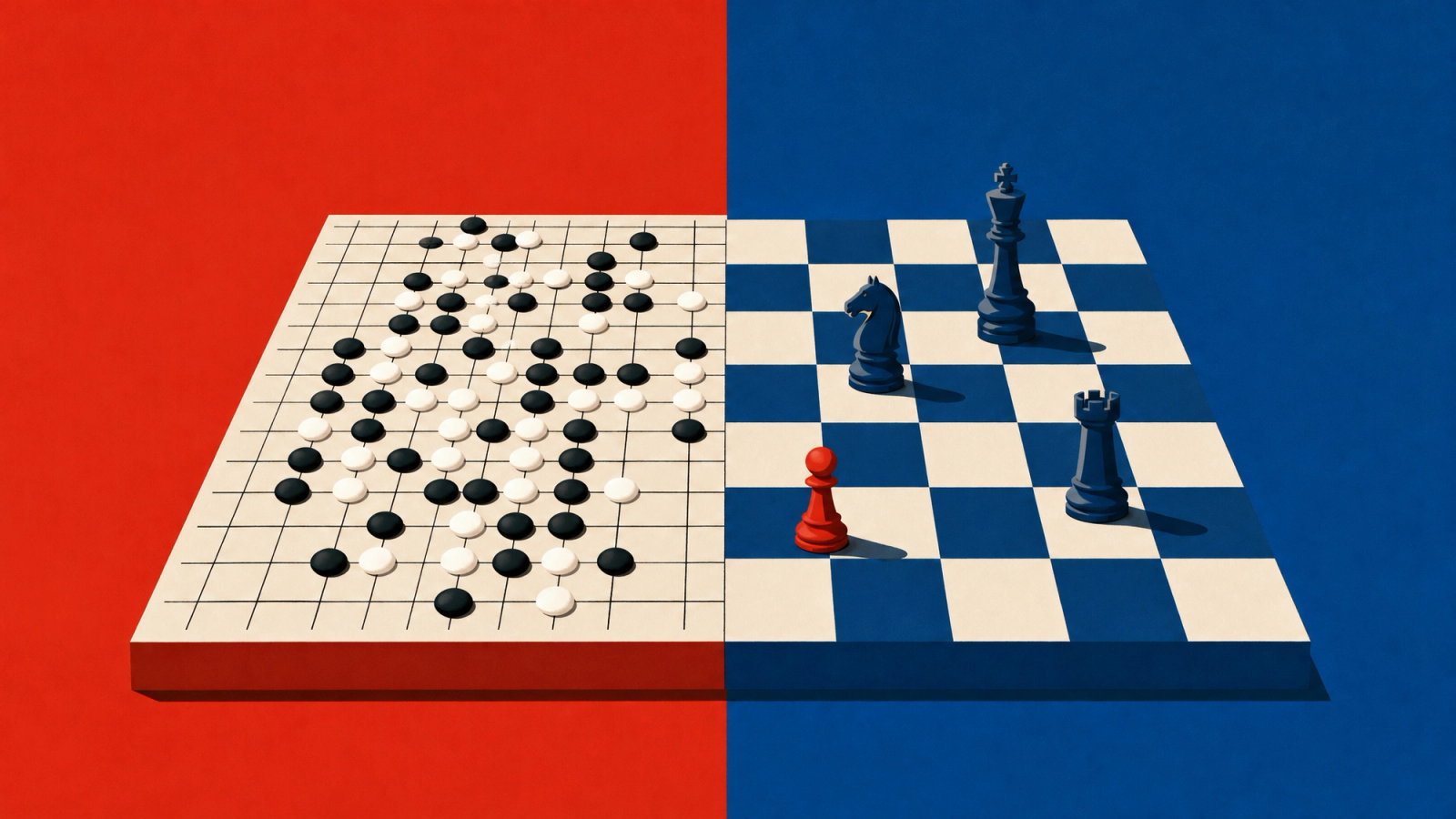
On July 16, a day before the World Artificial Intelligence Conference opened in Shanghai, representatives of 29 countries signed an agreement establishing the World Artificial Intelligence Cooperation Organization (WAICO), an intergovernmental body China says will promote global cooperation and “shared benefits” in AI. Chinese Foreign Minister Wang Yi signed on Beijing’s behalf; UN Secretary-General António Guterres attended the ceremony.
The launch is widely read as a direct challenge to American influence over how AI is built and governed — arriving precisely as Washington tightens its grip on the technology’s frontier.
What is WAICO?
- Founded: July 16, 2026, in Shanghai — a day before the World AI Conference.
- Members: 29 founding nations (10 African, 12 Asian), including Russia, Belarus, Serbia, Cuba, Brazil, Venezuela, Pakistan, Indonesia, Kazakhstan, Ethiopia and Cameroon.
- Signed by: Chinese Foreign Minister Wang Yi; UN Secretary-General António Guterres attended.
- China’s five-year pledge: 5,000 AI training slots for developing nations; cooperation centers with ASEAN, the Arab League, the African Union, CELAC, the SCO and BRICS; its “Mazu” AI weather early-warning system deployed in 30 countries.
- Not yet defined: voting rules, financing, accession terms, enforcement powers.
A bloc built from the Global South
WAICO’s 29 founding members lean heavily toward the Global South, spanning ten African and twelve Asian nations — among them Russia, Belarus, Serbia, Cuba, Brazil, Venezuela, Kazakhstan, Pakistan, Indonesia, Ethiopia and Cameroon. The body will be headquartered in Shanghai and, per the agreement, operate as an independent intergovernmental organization following the principles of the UN Charter.
China first floated the idea at the 2025 conference, and Xi reiterated it at APEC last October — but no country formally signed on until this week.
The pitch: ‘sovereign AI’
Xi framed the effort as a corrective to a US-dominated order, casting open-source AI as a “historic opportunity” to prevent “new historical injustices” for developing countries and urging nations to “jointly oppose overstretching the national security concept in the field of AI” — a pointed reference to US export controls.
“AI development should not be a solo performance by a single country, but a symphony of international cooperation.”
The promises came with numbers. Over five years, Beijing pledged 5,000 AI training slots for developing nations, cooperation centers with blocs including ASEAN, the African Union and BRICS, and deployment of its “Mazu” AI weather early-warning system across 30 countries.
The chip war underneath
The diplomacy sits atop a hardening technology conflict. In May, the US Commerce Department affirmed restrictions on advanced-semiconductor shipments to Chinese firms’ subsidiaries on national-security grounds; Beijing retaliated by barring exports of certain dual-use technologies and critical minerals to US companies. China still trails at the cutting edge of chip fabrication, but it holds cards Washington cannot easily match.
Two AI worlds, by design
- The walled bloc (US-led): closed frontier models; export controls on advanced chips; access vetted by Washington; advantage through raw capability.
- The open bloc (WAICO): low-cost, open-source models pitched as a public good; abundant cheap power and data-center capacity; rare-earth leverage; advantage through Global South reach.
How much of it is real?
For now, WAICO is long on symbolism and short on mechanics. The agreement does not spell out voting rules, financial commitments, accession requirements, or enforcement powers — the details that separate a working institution from a diplomatic forum.
“As Washington rapidly retreats from global cyber and AI norms-setting processes,” Carnegie Endowment analyst Arindrajit Basu noted, Beijing is courting Global South buy-in for its “state-centric governance vision of technology.”
An echo of 1961
When 25 states founded the Non-Aligned Movement in Belgrade in 1961, the pitch was refusing to pick a side in a superpower standoff. WAICO inverts it: its members aren’t staying neutral between Washington and Beijing — they’re consolidating behind one pole to gain leverage they lack alone. What rhymes is the constituency: the Global South seeking a seat at a table set by others. What’s different is the rationed resource — not military protection or aid, but compute, models, and the chips to run them.
Where things stand
The Shanghai conference runs through July 20 under the theme “Intelligent Partners, Co-create the Future.” Whether WAICO becomes a genuine standards-setter or a stage for Chinese soft power will depend on rules that have not yet been written — and on whether its members ever gain access to hardware the United States is working hard to deny them. What is already clear is the shape of the contest: two AI worlds, one walled and one open by design, each now recruiting.